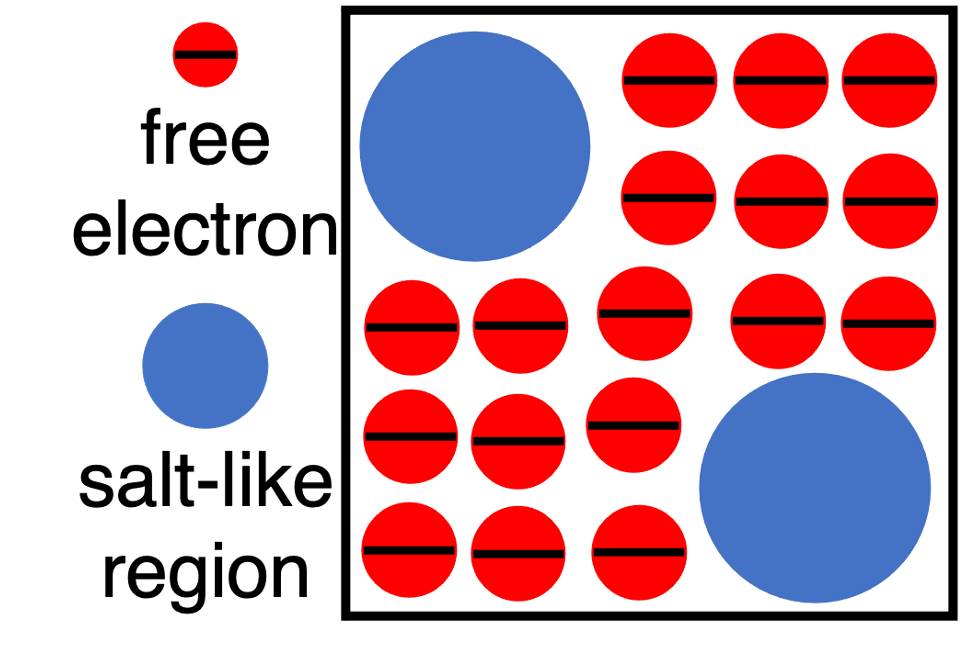
Electrides are compounds where a free electron acts as an anion. In a conventional intermetallic structure, the electron density is delocalized across a structural sublattice where metal-metal bonding occurs. However, in an electride, the electron density can be in any of the voids that the atoms are not occupying. These so-called “void metals” represent a tunable form of dimensional reduction in the solid-state, where a metallic matrix is “drilled” with ionic islands that repel conduction electrons. By focusing on subvalent materials, which have lower metallic oxidation states than one would expect from the octet rule, we will isolate and characterize new solid-state electrides.